Dynastic Prophecy
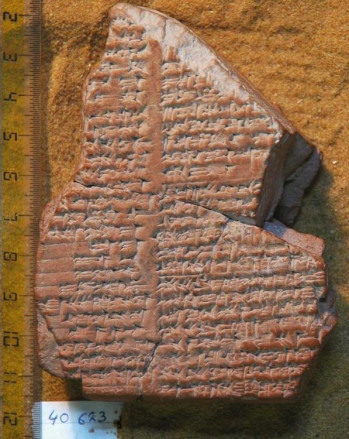
In mid-July 330, the Persian king Darius III Codomannus (r.336-330) was killed; this meant the end of the Achaemenid Empire, which was now taken over by the Macedonian conqueror Alexander the Great (r.334-323). One of the most tantalizing descriptions of Darius' death is the Dynastic Prophecy, which was written on a clay tablet found in Babylon. It is now in the British Museum.
At first sight, this remarkable text appears to document that at least one Babylonian believed that Darius III was not dead and would return victoriously. World history offers many examples of popular leaders who are believed not to have died: a brief catalog would include the miraculously saved king Croesus of Lydia, the last pharaoh of independent Egypt Nectanebo II, king Arthur of the Britons, the German emperor Frederick, and, in our own age, Adolf Hitler and Elvis Presley.
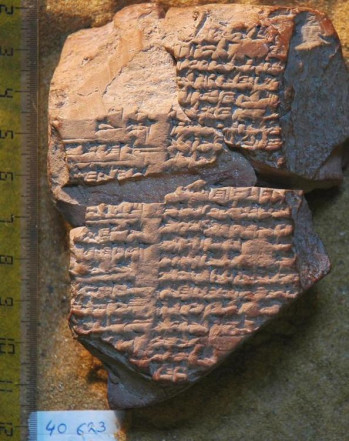
It would be interesting if we could say that Darius also belonged to this exclusive company, and several scholars have believed that the text does indeed prove that Darius was considered to be alive somewhere and would one day return to overthrow the Macedonians.
Unfortunately, there is a long break in the text (line 10) and we are not permitted to identify the king who fits the victorious army in the second part of the text with Darius, as has often been suggested. But if Darius is not the "he" of the second part of the prophecy, another identification has to be made. The words can refer to Alexander the Great, to several native leaders, but also to Seleucus Nicator, who defeated several Greek armies. This may be the most plausible interpretation.
The relevant lines are quoted below in the translation by Bert van der Spek.
Artaxerxes IV Arses |
||
|
[v.4] For two years [he will exercise kingship] |
||
|
[v.14] will assemble and his weapons he will ra[ise (...)] |
||
|
[v.13] they will plunder. Later [his] tr[oops ...] |
||
|
[v.12] booty from him they will take [and his spoils] |
||
|
[v.11] [his] troop[s they will defeat;] |
||
|
[v.10] .will set out a[nd? .. ]./-ship?\ th[ey will? ...] |
||
Alexander the Great |
||
|
[v.9] Troops of the land of Hani [......]note |
||
|
[v.8] Five years [he will exercise] king[ship] |
||
|
[v.7] will set out and [seize] the thr[one] |
||
Darius III Codomannus |
||
|
[v.6] A certain [rebel] prince [......]note |
||
|
[v.5] That king a eunuch [will murder]. |
||
|
[v.15] Enlil, Šamaš and [Marduk(?)]note |
||
|
[v.3] of his father [...]. |
||
|
[v.2] [... the] sceptre of kingship [...] |
||
Artaxerxes III Ochus |
||
|
[v.1] .. .. .. .. .. .. .. .. .. .. |
||
|
[v.23] Tax exemption [he will grant to Babylonia] [Lacuna of ca. 25 lines] |
||
|
[v.22] The heart of the land [will be happy] |
||
|
[v.21] [will enjoy] well-being. |
||
|
[v.20] The people who had [experienced] misfortune |
||
|
[v.19] into his palace he [will bring it] |
||
|
[v.18] His extensive booty he will car[ry off and] |
||
|
[v.17] the overthrow of the Hanaeannote troops he will [bring about]. |
||
|
[v.16] will go at the side of his army [(...);] |
||