Jona Lendering
Jona Lendering read history at Leiden University (MA 1993), specialized in Mediterranean culture at the Amsterdam Free University (MA 1996), and worked at excavations in Holland (Riethoven) and Greece (Halos). After teaching historical theory and ancient history at the Free University for several years, he was one of the founders of a school for history teaching, Livius Onderwijs. Born in Amsterdam, it has now spread to auxiliary locations in Bussum, Dronten, Gouda, Haarlem, Hoorn, Schagen, Zaanstad, and Zoetermeer. As of 2013, Livius Onderwijs has eight teachers, about 500-600 students a year, and offers tours to countries like Italy, Turkey, Iran, and Lebanon. The field trips help to etch into the students' minds some of what they've learned at the school.
Because history is for a large part telling a story, something you do best in your own language, Lendering prefers to publish in Dutch journals. However, he has contributed to the Bryn Mawr Classical Review and Ancient Warfare, while he is the founder of Ancient History Magazine. He is also the publisher and editor of the on-line publication of the Babylonian Chronicles of the Hellenistic Period, a set of important cuneiform sources for the history of the Seleucid and Parthian Near East, transcribed, translated and commented on by Bert van der Spek of the Free University Amsterdam and Irving Finkel of the British Museum. A publication as book is in preparation.
Lendering has written several books and maintains a blog in Dutch. He is the author of several books, including Edge of Empire and Consensus and Crises. For the Livius website, which has received several awards, he collaborates closely with Bill Thayer of LacusCurtius. Lendering is also the webmaster of two daily blogs, the MainzerBeobachter.com and Grondslagen.net.
There are 9380 items in Jona Lendering:
Van, Archaeological Museum
We visited this museum in 2007, but found it closed. Nevertheless, in the garden were some interesting objects. There are 3 items in Van, Archaeological Museum: …
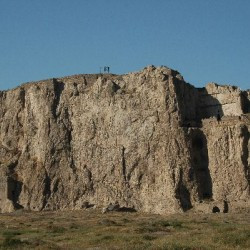
Van, Citadel, royal tombs: view from the south |
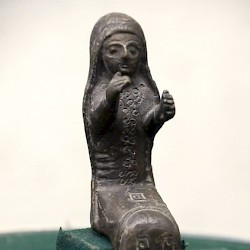
Van, Figurine of Arubani, goddess of fertility and art |
Vandals
Vandals: East-Germanic tribe that created a kingdom in northern Africa (435-534 CE).Origin Vandal fibula from Hippo Regius Originally an East-Germanic tribe; their…Vanden Berghe List
The Vanden Berghe List, named after the Flemish Iranologist Louis Vanden Berghe (1923-1993) is the catalog of ancient Iranian rock reliefs.1. Reliefs from Lullubi …
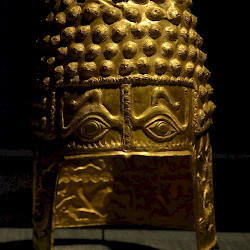
Varbilau, Helmet with mythological decoration |
Vardanes I
Vardanes I: Arsacid king of the Parthian Empire (r.29?-47?). Vardanes I In 38 CE, the Parthian king Artabanus II died; his main achievement…
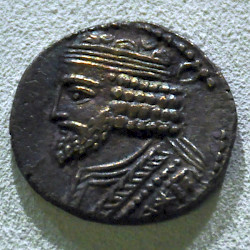
Vardanes I |
Vardanes II
Vardanes II: Arsacid rebel king of the Parthian Empire (r.55-58). A Parthian In the year 52 CE, the Parthian king Vologases I invaded…
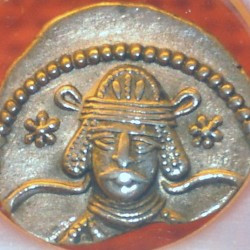
Vardanes II |
Sextus Varius Marcellus
Sextus Varius Marcellus (c.165-c.215): Roman aristocrat from Apamea in Syria, husband of Julia Soaemias, father of the Roman emperor Heliogabalus (218-222). …Varna, Museum of Archaeology
Splendid collection of Prehistoric, Thracian, Greek, and Roman objects and Medieval icons. There are 4 items in Varna, Museum of Archaeology: …