Jona Lendering
Jona Lendering read history at Leiden University (MA 1993), specialized in Mediterranean culture at the Amsterdam Free University (MA 1996), and worked at excavations in Holland (Riethoven) and Greece (Halos). After teaching historical theory and ancient history at the Free University for several years, he was one of the founders of a school for history teaching, Livius Onderwijs. Born in Amsterdam, it has now spread to auxiliary locations in Bussum, Dronten, Gouda, Haarlem, Hoorn, Schagen, Zaanstad, and Zoetermeer. As of 2013, Livius Onderwijs has eight teachers, about 500-600 students a year, and offers tours to countries like Italy, Turkey, Iran, and Lebanon. The field trips help to etch into the students' minds some of what they've learned at the school.
Because history is for a large part telling a story, something you do best in your own language, Lendering prefers to publish in Dutch journals. However, he has contributed to the Bryn Mawr Classical Review and Ancient Warfare, while he is the founder of Ancient History Magazine. He is also the publisher and editor of the on-line publication of the Babylonian Chronicles of the Hellenistic Period, a set of important cuneiform sources for the history of the Seleucid and Parthian Near East, transcribed, translated and commented on by Bert van der Spek of the Free University Amsterdam and Irving Finkel of the British Museum. A publication as book is in preparation.
Lendering has written several books and maintains a blog in Dutch. He is the author of several books, including Edge of Empire and Consensus and Crises. For the Livius website, which has received several awards, he collaborates closely with Bill Thayer of LacusCurtius. Lendering is also the webmaster of two daily blogs, the MainzerBeobachter.com and Grondslagen.net.
There are 9380 items in Jona Lendering:
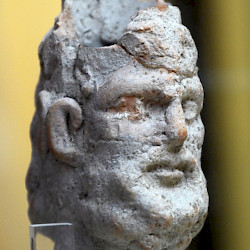
Utica, Small head of Janus |
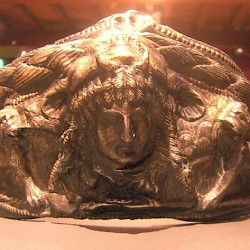
Utrecht De Meern, Crown of Cybele and two lions |
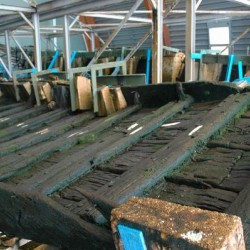
Utrecht De Meern, De Meern-1 at the NISA (Lelystad, Netherlands) |
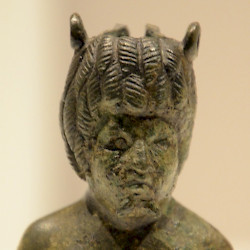
Utrecht De Meern, Head of a Nubian |
Utrecht-Leidsche Rijn
Utrecht-Leidsche Rijn: Roman fort, part of the Rhine limes, formerly known as Vleuten, and also called De Meern and Hoge Woerd. De…Utrecht, Castellum Hoge Woerd
Museum on the site of an ancient Roman fort that has been known as Vleuten, De Meern, Leidse Rijn, and Hoge Woerd. Many objects, including a boat. The fort has been rebuilt.Utrecht, Centraal Museum
Municipal museum of Utrecht, with several departments, including an attic with Roman finds. There are 7 items in Utrecht, Centraal Museum: …
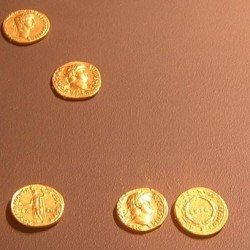
Utrecht, The "treasure of the Domplein" (or what remains of it, since most coins were stolen) |
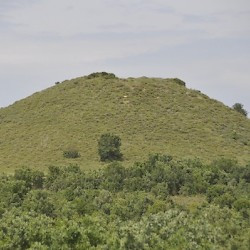
Uvecik Tepe |
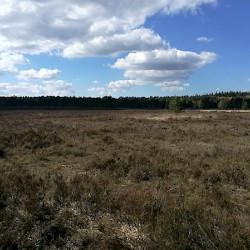
Vaassen, Celtic Field |
Vaballathus
Vaballathus: emperor of Palmyra (r.267-272). Vaballathus Names: ±260: Lucius Julius Aurelius Septimius Vaballathus Athenodorus Autumn 267: rex regum, corrector totius Orientis, dux Romanorum Summer 272:…
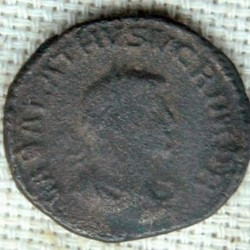
Vaballathus |