Zeus (Greek: Ζεύς): Supreme deity of the ancient Greeks. Adopting Greek mythology, the Romans identified him with Jupiter.
Zeus
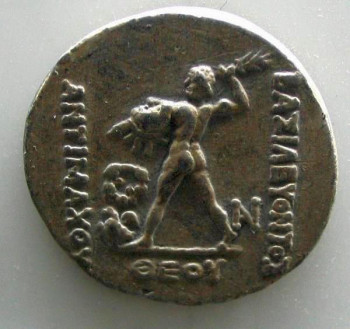
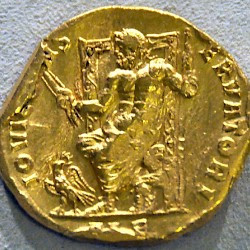
A thundering Zeus on a coin of Antimachus
Originally an Indo-European deity (Greek Zeus = IllyrianDeipaturus, = Latin Jupiter)
Venerated in Mycenaean times (Linear-B: Po-se-da-o) but still identified with Poseidon
According to Homer, the "father of gods and men" resides on the mountain Olympus; his wife Hera is the mother of Ares, Hebe, and Hephaestus; Zeus, however, also has children from many other goddesses (e.g., Athena is a daughter of Metis) and from mortal women (e.g., Alcmene's son Heracles)
Various names: Zeus Chrysaoreus ("of the golden sword"), Zeus Eleutherius, ("Zeus the Liberator"), Zeus Kyrios, Zeus Olympius, Zeus Polieus, Zeus Stratios, Zeus Xenios
The philosopher Cleanthes hailed Zeus as the "first cause who ruled everything through the laws of nature".
There are 24 items in Zeus - zeus:
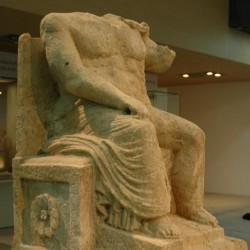
Artemisium, Statue of Zeus
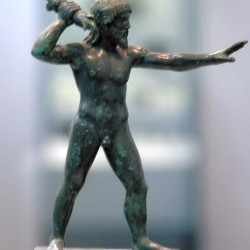
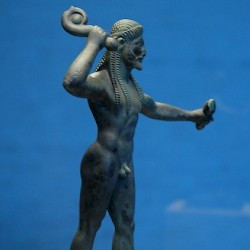
Dodona, Figurine of Zeus Keraunos
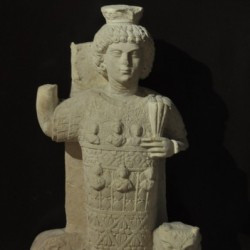
Palmyra, Jupiter Heliopolitanus
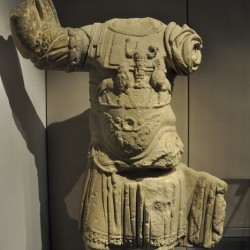
Carnuntum, Statue of a Roman commander with a picture of Jupiter Heliopolitanus on his armor
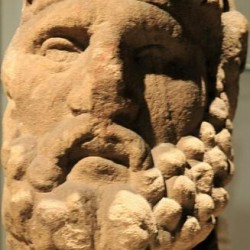
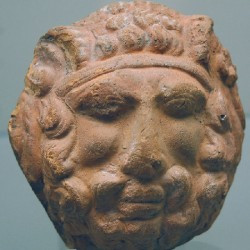
Lechenich, Head of Jupiter Ammon
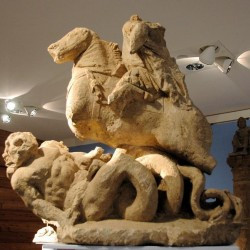
Tongeren, Jupiter Column, Jupiter killing a giant
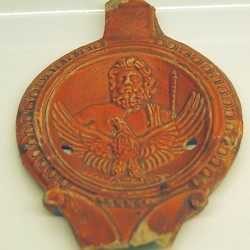
Nijmegen, Oil lamp, Jupiter and his eagle
Jülich, Jupiter
Coin with Phidias' statue of Jupiter in Olympia
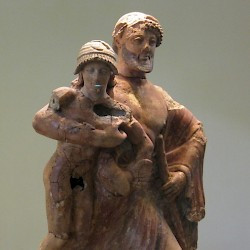
Olympia, Figurine of Zeus and Ganymede
Corinth, Archaic figurine of Zeus
Woerden, Mask of Jupiter-Ammon
Jupiter
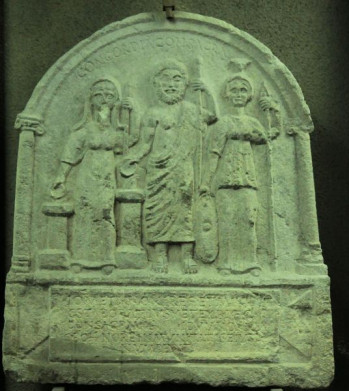
The Capitoline Triad (relief from Novae)
When the Romans adopted Greek mythology, they identified their Jupiter with the Greek Zeus. The Capitoline Triad, the main focus of Rome's state cult, consisted of Jupiter, Minerva (Athena) and Juno (Hera).
Various names: Jupiter Capitolinus, Jupiter Feretrius, Jupiter Stator, Jupiter Tonans
Identified with various other foreign deities, like the Jupiter Dolichenus and Elagabal
In Late Antiquity, Jupiter and Hercules were worshipped as the protectors of the Tetrarchs