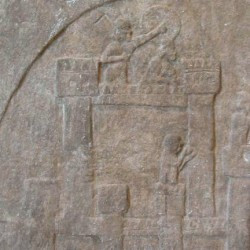
Kalhu or, Biblical, Kalah (Hebrew כלח): capital of ancient Assyria, modern Nimrud.
History
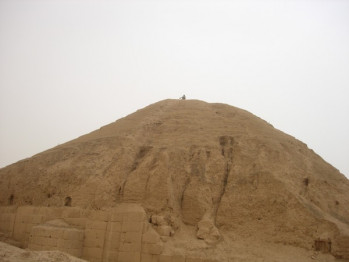
The ziggurat of Nimrud
This city, called Kalhu by the Assyrians and called Kalah (or Calah) in the Bible, was a capital of Assyria. Like so many ruins, it is often called "Nimrud", after the legendary king who is often associated with antiquities in the Near East.
Kalhu was founded by king Šalmaneser I (r.1263-1234)
King Aššurnasirpal II (r.883-859) chose Kalhu, until then a small town, as his residence. A labor force of no less than 47,000 people built the city, which was six times larger than the old capital, Aššur.
If the city - as king Aššurnasirpal claims in one of his inscriptions - counted 16,000 inhabitants, food must have been imported from upstream along the Tigris
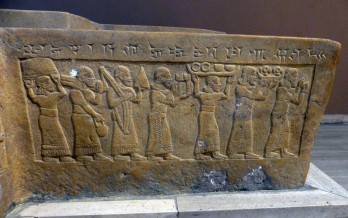
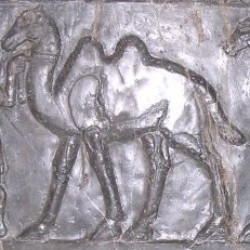
Nimrud, Throne platform of Šalmaneser III, Relief of tribute bearers
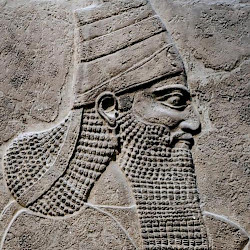
745-727: Reign of Tiglath-Pileser III: great splendor
The town remained capital of Assyria until 706 BCE, when king Sargon II founded Dur-Šarukkin (Khorsabad), which would be replaced by Nineveh (Mosul).
In 401, the Greek mercenary Xenophon stayed in this town, which was now called Larissa. He mentions how the inhabitants had fled to the ziggurat.note[Xenophon, Anabasis 3.4.6-9.]
The Palace of Aššurnasirpal II
There are 8 items in Kalhu (Nimrud) - nimrudnwpalace:
Some Remains
There are 4 items in Kalhu (Nimrud) - nimrudremains:
Some Museum Pieces
There are 24 items in Kalhu (Nimrud) - nimrudmps:
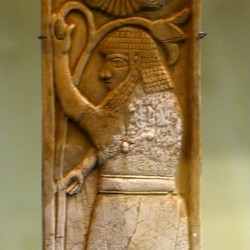
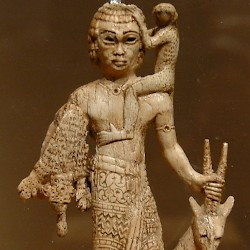
Nimrud, Ivory
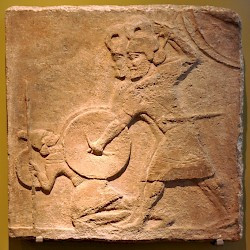
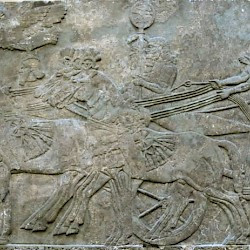
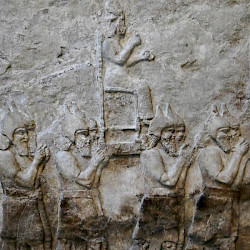
Nimrud, Relief with soldiers
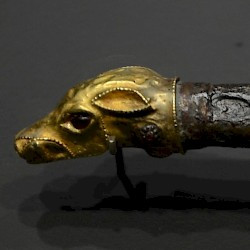
Nimrud, Handle of a fly whisk
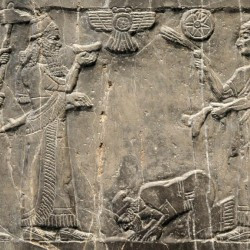
Nimrud, Black obelisk of Šalmaneser III: tribute of king Jehu of Israel