Sparta (Greek Σπάρτα): one of the main city-states of ancient Greece, leader of the Peloponnesian League. The city-state is also called Lacedaemon.
History
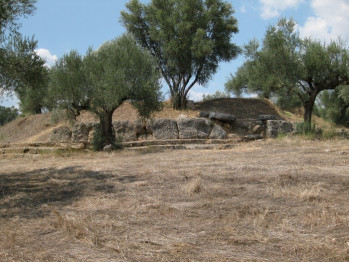
The acropolis of Sparta
Mentioned by Homer as an important town in early Greek history, ruled by king Menelaus and his queen Helen; Mycenaean finds corroborate Sparta's early importance
Several villages on the plain of the river Eurotas become one city-state (although it took long before they developed a real urban unity)
Inhabitants of the surrounding villages reduced to various lower statuses (a/o perioikoi)
s.VIII BCE: no colonization, but expansion on the Peloponnese
s.VII BCE: Conquest of Messenia, creation of the helots
s.VI BCE: creation of the Peloponnesian League; Sparta becomes the leading power in Greece, although its ambitions are usually limited to the Peloponnese
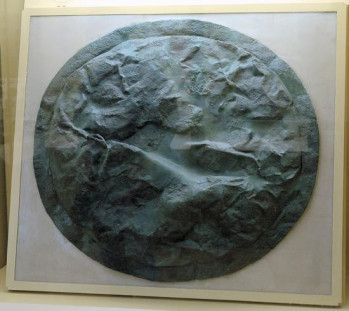
Spartan shield, seized by the Athenians at Sphacteria
480-479: Defense of the Peloponnese against Persian aggression forces Sparta to fight at Thermopylae, Plataea, Mycale
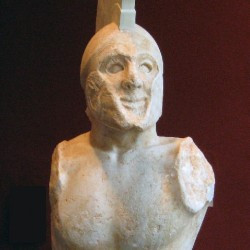
Sparta, Temple of Athena Chalkioikos, Statue of a Spartan hoplite ("Leonidas")
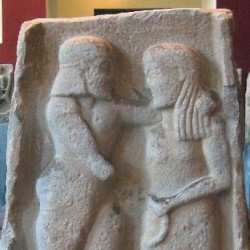
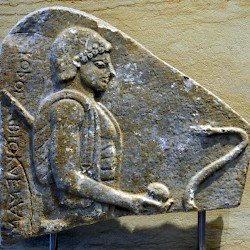
Sparta-Magoula, Relief of Menelaos and Helen
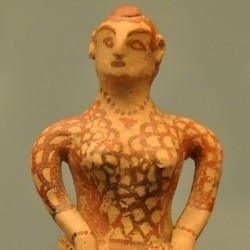
Sparta, Mycenaean figurine of a woman
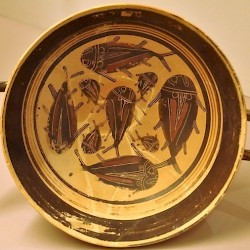
Sparta, Laconian bowl decorated with fish
395-387: Corinthian War; Sparta maintains its hegemony
371: Battle of Leuctra: end of Spartan hegemony, liberation of the helots of Messenia
Sparta remains outside the Corinthian League and does not take part in Alexander's campaign against the Achaemenid Empire; on the contrary, the Spartan king Agis III attacks Macedonia
Slow decline in the course of the third century
Forced to join the Achaean League; part of the Roman province of Achaea after 146 BCE
Retains some of its archaic custom to attract Roman "tourists"
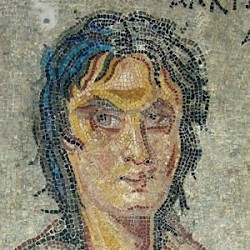
Sparta, Mosaic of Alcibiades
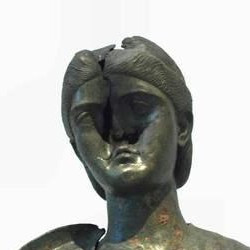
Sparta, Statue of Julia Aquilia Severa, damaged after her death
Sparta-Magoula, Relief of a young hero
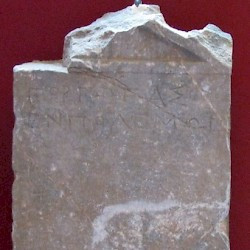
Sparta, Temple of Athena Chalkioikos, Inscription of someone killed in action